Countries
Spain sent us off with orange groves, sunshine and a little sadness at leaving our friends behind. We left Valencia in mid-April feeling nervous and overloaded: 16kg bikes, 13kg of bags each, but the first few days along the familiar coastal roads eased us in gently. The route through the Sierra de Irta natural park was a real highlight, but hard going, and we had great days in both Girona and Figueres. The Dalí museum alone was worth crossing a country for.
Catalonia tested us, though. The EV8 signs basically evaporated at the regional border, the roads got hillier and rougher, and the winds coming off the Ebro delta were genuinely relentless. We abandoned the last 15km into Miami Platja and jumped on a train without a moment's guilt.
Spain set the tone for the whole trip: generous drivers, brilliant food stops, the occasional proper physical challenge, and a generous helping of yellow cars that made everything seem worthwhile.
Crossing the Pyrenees into France felt like a major achievement and that we were actually making progress. It also felt like stepping into a different world. Everything got tidier, the roads better-maintained, the supermarkets dramatically more exciting. The section from Perpignan to Arles was some of the most beautiful cycling of the entire trip, canal paths lined with plane trees, flamingos drifting through the wetlands, the medieval walled city of Aigues-Mortes rising impossibly out of the flat plain. We met our cycling buddy Soren on a canal towpath and ended up sharing several days together.
Provence was something else entirely. Aix-en-Provence, the wildflower roads, a giant field of poppies that we had to stop and frolic in. We celebrated our 1,000km milestone, nearly destroying a phone on a tripod in the process.
The not-so-great bits: the mosquitoes along the coast were enormous — the first one we saw, we thought it was a small crane fly. Three guard dogs chased us and bit at our shoes. And the headwinds on some stretches were properly grim. But France more than made up for it, we left reluctantly, heading towards Monaco with tired legs and full hearts. The drivers are courteous and friendly, it's our favourite country to cycle in.
Monaco was intense! We passed through it in a couple of hours, entering Monte Carlo and immediately ending up on the Formula 1 Circuit road. The whole place is permanently dominated by Formula 1 with huge barriers, grandstand seating and no room for pedestrians (and definitely not bicycles). It was also full of very high-end cars. The majority of our experience was trying to find somewhere to eat our packed lunch. We eventually found a park where all the benches were full and we weren't allowed to sit on the grass. Our friend Soren kept getting told off wherever he put or leaned his bicycle.
We had expected Italy to be a real highlight based on previous visits, but were surprised to discover it was quite a mixed bag.
The Po plain is flat, industrial in patches, and car-dominated even through town centres. Some days were genuinely hard: rain and headwinds on the long stretch from Pavia to Mantua, a grim stretch of gravel track next to a water pumping station that sapped Mat's will to live and clouds of sticky, fluffy poplar seeds floating around. There was a lot of heavy freight traffic even on smaller roads and zero hard shoulder; we had to change our route when the lorries flying past in both directions got too hairy.
Italian drivers were the worst of the whole trip, overtaking on blind bends, passing with mere centimetres of room, and shouting at us regularly (I promise we followed the road rules). One morning a driver cut across a roundabout, driving on the wrong side of the road, straight towards Mat. Tractor drivers were even worse.
It didn't help that the weather was cold and grey with thunderstorms. We ended up skipping our last day of cycling to Trieste and spent extra days there waiting out the storms.
On the other side the cities were extraordinary: Turin's majestic porticos and plazas, Cremona with its Stradivarius legacy, Mantua rising out of its lakes, Ferrara the UNESCO jewel, Padua with its ancient frescoes and the oldest botanical garden in the world and Treviso with its gorgeous waterways and back streets. The food and produce were fantastic and cooking with Italian ingredients was a genuine joy. We had our longest day in Italy (103km to Ferrara) - luckily it was a nice sunny day with a tailwind for a change.
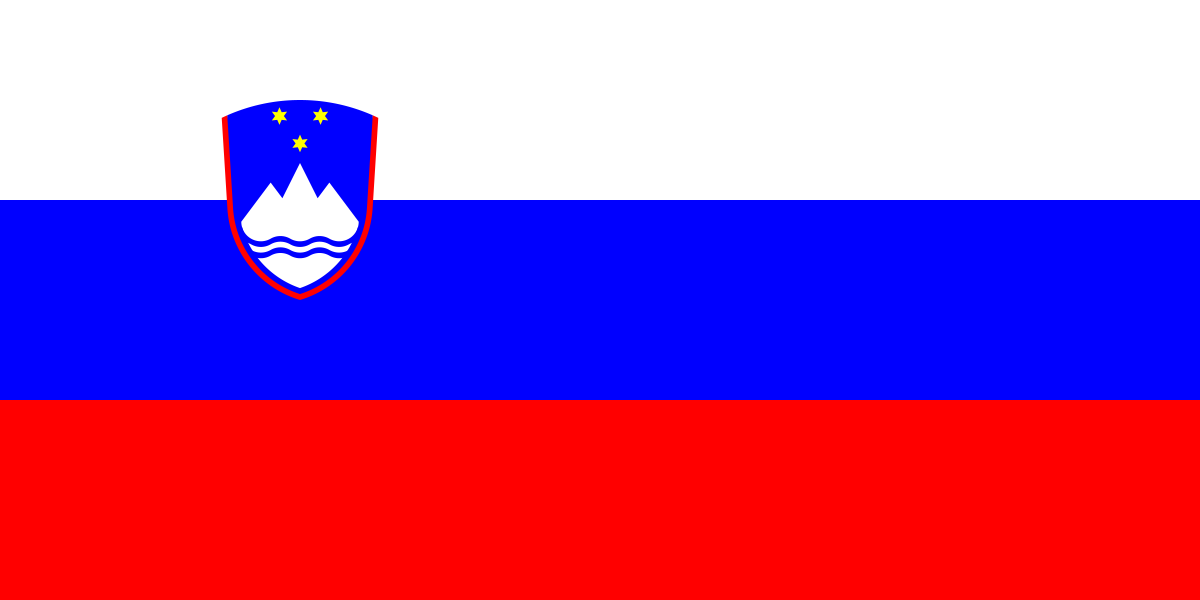
Our visit to Slovenia was only slightly longer than the one to Monaco, but much more pleasant. The stretch we cycled along was for the most part a disused railway line that was perfectly set up for cyclists. The roads, houses and gardens were very tidy and well kept, the countryside green and pretty. The beach town just before we crossed the border had a lovely, quiet promenade and a coffee machine where Mat got to try two kinds of coffee. We'd love to visit again and spend more time here!
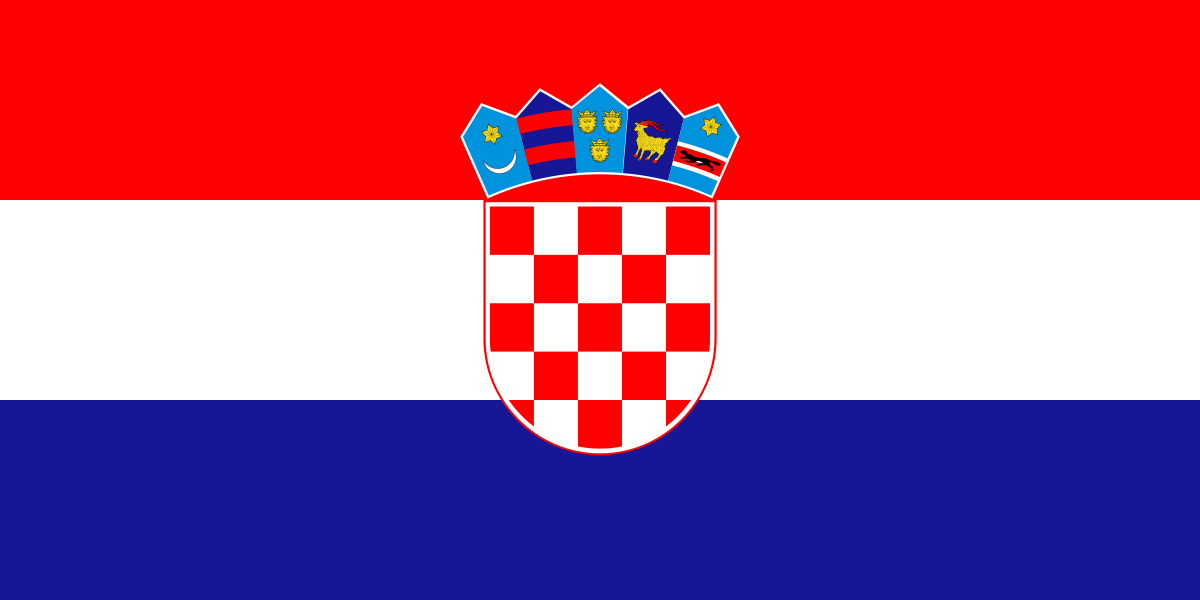
Croatia was probably our favourite country of the whole trip, mainly down to the landscape. We rode through ancient forests, along breathtaking stretches of the Adriatic, and across idyllic islands. Pula's enormous Roman amphitheatre was a genuine jaw-dropper, and Split's old city inside Diocletian's palace was just incredible. It wasn't easy cycling - we had several days with around 800m of climbing, which is a decent workout when you're carrying 13kg of luggage - but the drivers were generally very friendly and patient with cyclists.
We took a few extra days off in Split: Mat had minor surgery to remove a cyst and needed a bit of recovery time. We hired a car from Split to Dubrovnik to give him some extra time, and then hopped back on the bikes for the last 40km to the border with Montenegro.
The diet is mainly meat and fish, with fruit and veg very much as an afterthought, and the supermarkets all have a fairly basic range selling the same brand of yogurt, pasta sauce etc. We ate well but food was definitely less exciting than other countries we visited.
The Adriatic is beautifully clear! Our Scuba diving experience in Dubrovnik was on a different level to diving in Valencia. There is so much sea life visible even from the shore, and the clinic where Mat had surgery repeatedly told him the best treatment was swimming in sea water.
The whole country is a geographical oddity being so long and thin, tapering to a very narrow stretch between the sea and mountains in the south. Until 2023 you could only reach the Dubrovnik region of Croatia by crossing through Bosnia and Herzegovina, but there's now a bridge from the northern mainland to a peninsula further south.
The whole country is obsessed with the Split football team, Hajduk, with the possible exception of the supporters club Torcida which is even more obsessed with itself. The country is covered in graffiti and murals for both. There were also a number of Hajduk-themed murals memorialising people (supporters?) who died in the Homeland war; there was one near where we stayed in Dubrovnik which had the same name as our host, we assume it was their son.
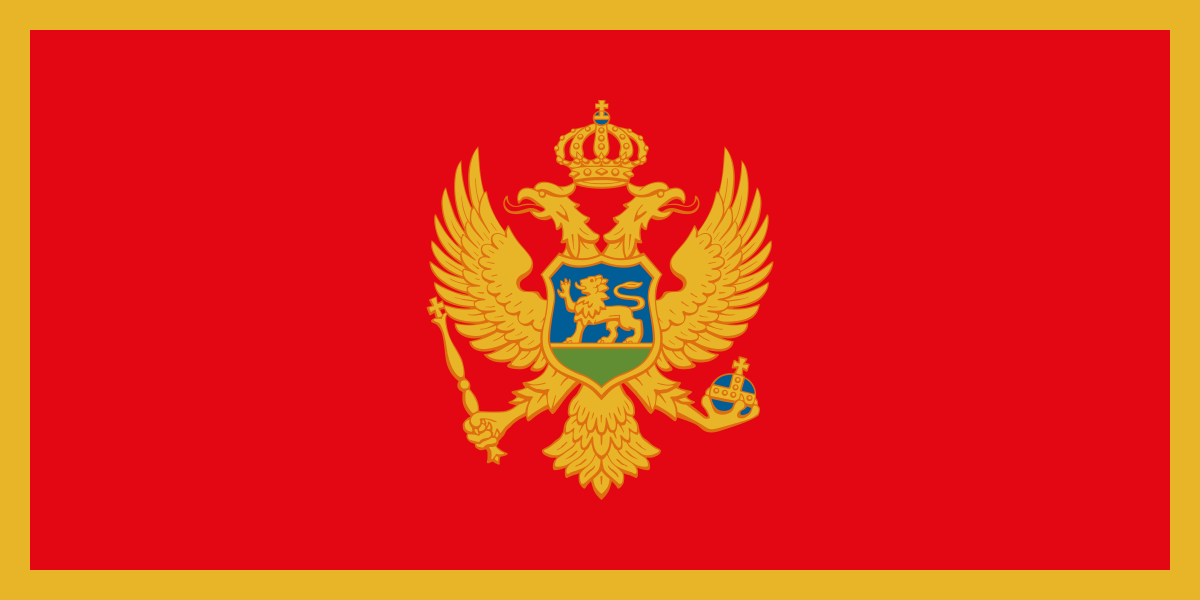
In a lot of ways, Montenegro felt like a smaller version of Croatia - the language is similar, the people are very friendly, the country has a nice relaxed feel to it. But in other ways we're clearly not in the EU any more. One example: when we entered the country we almost instantly racked up €60 phone bills EACH for 5MB of data - up to now we've been inside the EU and could use our mobiles just like at home. Another example: we were in a supermarket looking for free range eggs, and Mat opened a box looking for the code on each egg that says how the hen was raised, then realised that this is an EU requirement. They're not in the EU yet but the currency is Euro.
Overall, people were kind and welcoming. We did experience some crazy driving and long stretches of roads under constant construction. There was a very near crash when a tourist pulled out extremely slowly into the path of a loaded car transporter which had to screech to an emergency stop. On another road, a car which couldn't turn left because of a median barrier just drove the wrong way to a roundabout, beeping his horn to warn people.
Montenegro has one of the 3 submarine bases of the former Yugoslavia in Tivat and visiting a submarine was a surprise highlight.
Fun fact: Montenegro was the name given to the country when it was under Venetian rule, a calque of the original name meaning black mountain in Montenegrin.
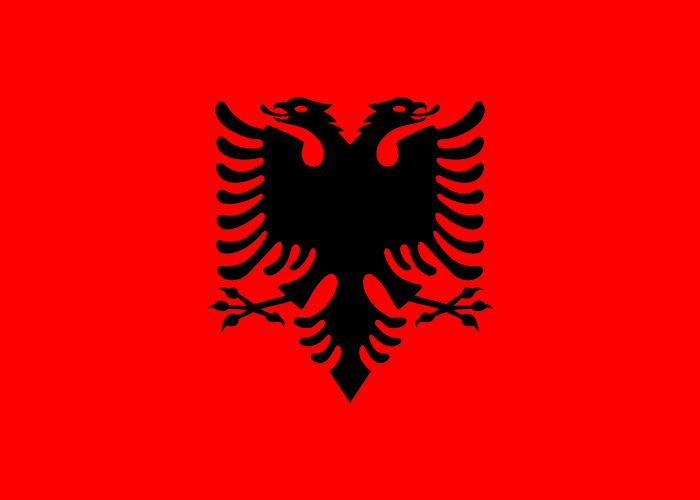
Albania was a close second after Croatia for our favourite country of the trip. We'd heard some dire stories about the roads and the drivers, and had no idea what to expect from the country as a whole, so we entered with a bit of trepidation.
As soon as we crossed over the border we noticed it didn't have the same European vibe as everywhere else we had been. Albania was... different. People nod their heads no and shake them to mean yes. There are mosques everywhere. The power and phone cabling in the street is out of control. There are no traffic regulations, you can seemingly do whatever you like as long as you don't hurt anyone. But it was fun and everyone is super friendly!
After Croatia and Montenegro it was exciting to see fruit and veg sellers everywhere: along the highway, on the streets in city centres, outside supermarkets (which don't sell their own fruit and veg). A lot of older women wear white scarves over their heads, sometimes pinched into a bonnet. A minority of motorcyclists wear helmets (although apparently it's mandatory). They love German cars - most of the vehicles we saw were Mercedes, VW, Audi and some top end Porsches. We also saw lots of British number plates; our transfer driver told us they were visiting from Britain (his family who live in south London have made the journey before) but it could be a kudos thing. Sooo many car washes (lavazh).
One third of the population has left since the fall of Communism and the majority of the remaining 2.4 million live in Tirana, which has sprawling and unplanned slum neighbourhoods next to some crazy modern high-rises. The language is pretty much an isolate, but they've absorbed lots of English and Italian words. The currency is Lek and many small sellers will only accept cash, but lots accept Euro as an alternative. We've received more warmth, hospitality and kindness than in any other country so far.
There are So0mbras! We never got to the bottom of why.
The best part was staying in so many lovely family-run places where people were falling over themselves to help us, and we left with a lot of love for Albania.
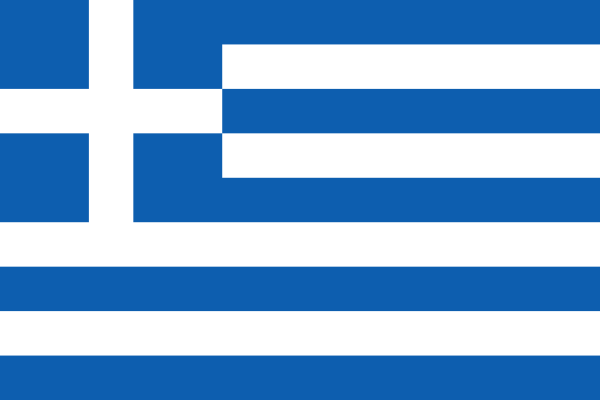
Greece was unexpectedly beautiful and quiet. We had never visited before and like Albania, weren't sure what to expect. Maybe more development and high-rise resorts along the coast like Spain?
The reality was quite different. The far north, near the Albania border, was green and unspoilt, with little sandy coves and a few houses among the trees. Further south it got hotter, but it was still beautiful with a lot of natural areas. The ride into Athens was very busy and not at all pretty, but at least we were able to cut out much of the journey by hopping on a ferry.
The infrastructure was back to EU standards and road use was not happy-go-lucky as it had been in the Balkans. When we wanted to pass through the Preveza tunnel where bicycles weren't allowed, the control centre gave us a shuttle service by van.
Some of the towns could have been more interesting - Corinth was a particularly dull place (we stayed in new Corinth not the historic Corinth) but overall the roads were excellent, the drivers were very courteous and the refreshment stops close together.
Athens was an absolute joy, what a lovely city, and the island of Chios was a great place to relax for a few days. Well done Greece, we'll be back!
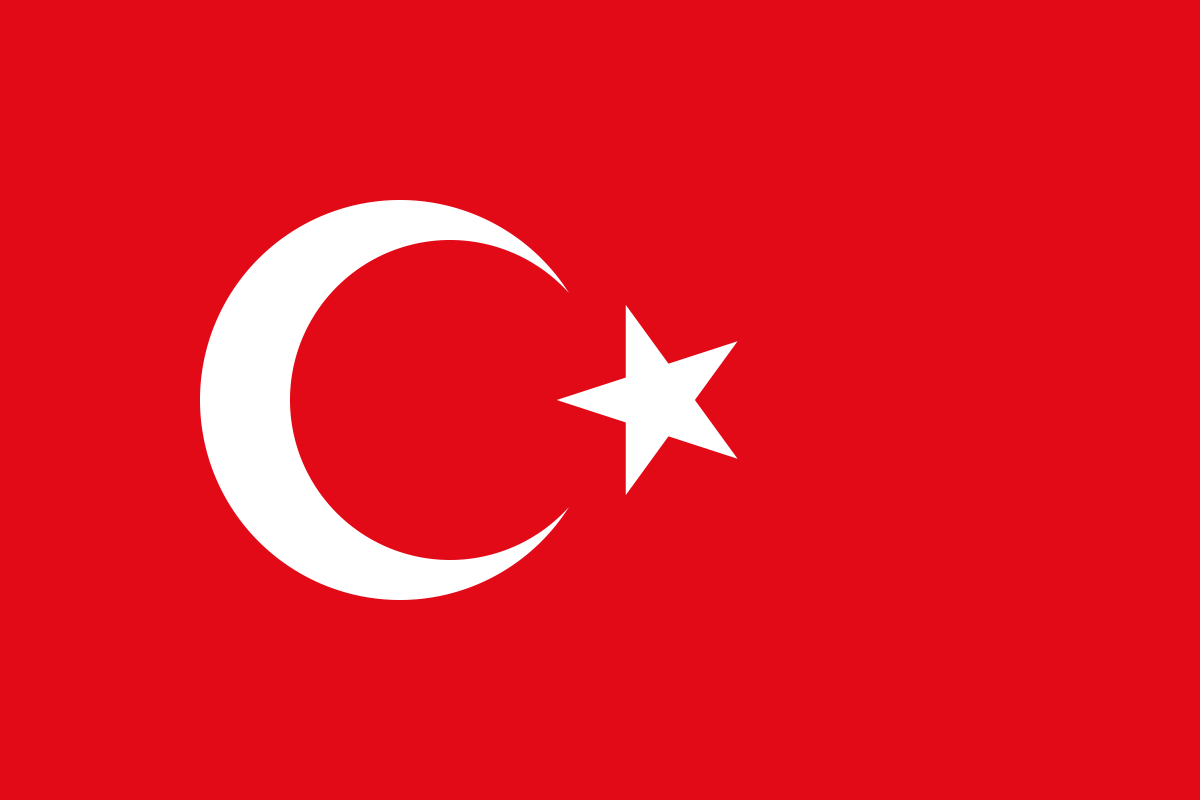
Yet again, our expectations were confounded when we arrived in Turkey. After Albania and Greece we had been expecting a less developed country, but straight away Turkey felt like a richer, more prosperous place. There were a huge range of shops and services, properties were smartly maintained and it was generally more bustling (certainly compared to Chios). We also weren't sure how conservative the people would be, but as tourists we had no problems.
Our first impressions were that Turkey was friendly, relaxed and h-o-t. We got through 8L of water on the first day's cycling. The drivers treated us like superstars, giving us friendly beeps and waves. The hotels we stayed in were lovely with very welcoming owners. Men were extremely deferential to Kat, not allowing her to carry anything. One car even stopped as she was riding up a hill and asked her in English if she needed anything.
The couple of days cycling from Cesme to Izmir along the last stretches of the EV8 was enjoyable, but as the cycle lanes gave way to highways it was clear that riding this part of Turkey would be more challenging than fun. We got a minivan transfer from Izmir to Bandirma which confirmed that it wasn't suitable for us: very hilly at first with huge swathes of forest, and then endless wheat fields with nothing in between. The final leg of our journey was a ferry to the European side of Istanbul.
Istanbul was vast and beautiful, and we loved exploring it with our friends when they arrived. We had never visited a mosque before and were a bit concerned about committing a faux pas, but they turned out to be very welcoming places. Ten days was probably too long, at least to stay just in the old part of the city, and avoiding rip-off restaurants and bars and putting up with their constant entreaties to come in became exhausting and tedious. However we left with the impression that Istanbul is an exciting melting pot like nowhere else in the world.